
Antique Furniture in Costa Mesa: An Expert Buying Guide
To buy antique furniture in Costa Mesa that you’ll admire for decades, inspect each piece in person, checking four things: how it was built, the condition of its finish, any evidence of its maker or history, and whether its structure is sound. A curated consignment showroom makes that easy, because you can see, touch and compare quality pieces side by side before you commit. This guide walks you through exactly what to look for.
Antique and vintage furniture adds character, craftsmanship and a story, but not every “old” piece is a good buy. Here is how to evaluate what you are looking at.
Antique vs. Vintage: Know What You’re Buying
The terms are often used loosely, so it helps to know the general conventions. A piece is usually called an antique when it is roughly 100 years old or more. Vintage generally refers to pieces that are at least a few decades old and represent the style of their era. Neither label automatically means “valuable.”
Many of the most sought-after pieces in Orange County homes are high-quality 20th-century furniture from makers such as Karges, Baker, John Widdicomb and Henredon, which are known for traditional craftsmanship and period-inspired designs. Knowing whether a piece is a true antique or a fine vintage reproduction helps you judge its price and its place in your home.
How to Evaluate the Antique Furniture Costa Mesa Showrooms Offer
1. Look at the Construction and Joinery
Joinery is one of the most reliable clues to both quality and age. Pull out a drawer and look at the corners.
- Dovetail joints are interlocking wedge-shaped joints. Hand-cut dovetails tend to be slightly irregular, with fewer, wider “tails.” Machine-cut dovetails are perfectly uniform and evenly spaced.
- Mortise-and-tenon joints, sometimes secured with wooden pegs, indicate traditional, durable construction in chairs, tables and case pieces.
- Staples, heavy glue and particleboard are signs of mass production and lower longevity.
Also look at the back panels and drawer bottoms. Older hand-worked wood may show uneven plane marks, while straight saw marks or perfectly uniform surfaces suggest later, machine-made construction. Hardware tells a story too: older handmade screws and nails are often irregular.
2. Understand the Wood and Veneer
Solid wood is prized, but veneer is not a red flag on its own. Many fine antiques and high-end vintage pieces use beautifully matched veneers over a solid base, especially in exotic or highly figured woods. What matters is the quality of the veneer work. Check for lifting edges, bubbles or missing sections, particularly near the bottom of legs and around drawer fronts.
3. Inspect the Finish and Patina
A genuine aged finish develops patina, the soft, mellow glow and subtle wear that comes from decades of use and handling. Look for natural wear where hands and feet would touch: drawer pulls, chair arms, stretchers. Wear that appears in odd places, or a finish that looks too uniform, can indicate refinishing or reproduction.
Refinishing is not always bad, especially on a piece you plan to use daily, but with true antiques an original finish usually carries more value.
4. Search for Provenance and Maker’s Marks
Provenance is a piece’s history: who made it, where it came from and who has owned it. Check inside drawers, under tabletops and on the backs of case pieces for labels, stamps, branded marks or paper tags. Quality American makers frequently labeled their work, and these marks can confirm a piece’s origin. Original receipts, appraisals or family documentation also add confidence and can support the price.
5. Assess the Condition Honestly
Condition affects both value and livability. Before you buy, check that:
- The piece sits level and does not wobble or rack when gently pushed
- Drawers and doors open and close smoothly
- Joints are tight, with no cracked or loose legs
- There are no signs of insect damage, such as small exit holes with fresh dust
- Upholstered pieces have sound frames and springs, even if the fabric needs updating
Surface scratches are often easy to address; structural problems cost more, so weigh them against the price.
Quick Evaluation Checklist
| What to Check | Good Signs | Signs to Question |
|---|---|---|
| Joinery | Dovetails, mortise and tenon, pegged joints | Staples, heavy glue, particleboard |
| Finish | Natural patina and logical wear | Wear in odd places, overly uniform finish |
| Veneer | Tight, well-matched, intact edges | Lifting, bubbling or missing sections |
| Provenance | Maker’s labels, stamps, documentation | No history and an unusually high price |
| Structure | Level, sturdy, smooth drawers | Wobbling, cracks, insect damage |
Why a Consignment Showroom Is a Smart Place to Buy
Online photos flatten patina and hide wobbles and veneer damage. A curated consignment showroom offers real advantages:
- You inspect in person. Open the drawers, check the joints and see the true color of the wood.
- Pieces are pre-screened. At Lido Gallery, furniture is pre-approved from photos before it is accepted, so the floor focuses on quality.
- Pricing reflects real factors. Items are priced on uniqueness, popularity, condition, provenance and the current going price.
- Selection is constantly changing. New items arrive daily, so regular visits turn up fresh finds.
- No strangers’ homes. You shop in a showroom, not someone’s garage.
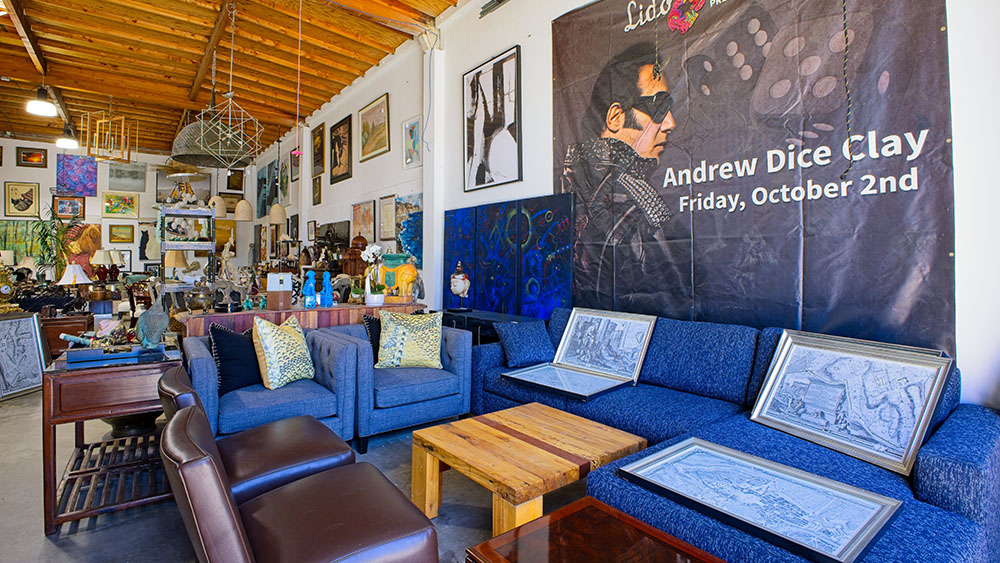
Our 20,000-plus square foot Costa Mesa showroom, which moved from its former Newport Beach location in the Lido area, is filled with antique furniture Costa Mesa shoppers can inspect up close, alongside vintage and designer pieces styled in room-like settings. For more on the value of buying pre-owned, read why buying consignment furniture is smarter than buying retail, and for design inspiration see our post on timeless vintage furniture finds for Costa Mesa interiors.
Tips for Shopping Antique Furniture in Costa Mesa
- Bring measurements. Know your room dimensions, doorway widths and stair clearances.
- Plan for transport. Our sales staff cannot lift heavy items, so arrange your own help or hire an independent mover for larger pieces.
If you have antiques of your own to sell, the same factors that matter to buyers determine how pieces are priced. Our consignment terms explain how it works, and our guide to art consignment in Orange County covers paintings and decor.
Frequently Asked Questions
How can I tell if furniture is a real antique?
Look for hand-cut dovetail joints with slight irregularities, mortise-and-tenon construction, natural patina and wear in logical places, and older hardware such as irregular handmade screws. Check drawers and backs for maker’s labels or stamps. A piece is generally considered antique at about 100 years old. When in doubt, documentation and provenance provide the strongest confirmation of age.
Does refinishing reduce the value of antique furniture?
For true antiques, an original finish usually carries more value than a refinished one, because patina is part of the piece’s history and character. For vintage furniture you plan to use every day, a quality refinish may be perfectly acceptable. Always ask whether a piece has been refinished, and weigh that against its price, condition and how you intend to use it.
Where can I buy antique furniture in Costa Mesa?
Lido Gallery Newport, now located at 1010 W 17th St in Costa Mesa after moving from Newport Beach, offers antiques, vintage pieces and designer furniture in a showroom of more than 20,000 square feet. Inventory changes daily, and pieces are pre-approved before they reach the floor, so shoppers can inspect quality furniture in person.
Is veneer a sign of lower-quality furniture?
Not necessarily. Many fine antiques and high-end vintage pieces use carefully matched veneers over a solid base to showcase beautiful wood grain. The quality of the veneer work matters more than its presence. Look for tight, intact edges and avoid pieces with significant lifting, bubbling or missing sections unless the price reflects the needed repair.
What brands should I look for in vintage furniture?
Respected American makers such as Karges, Baker, John Widdicomb, Henredon and Marge Carson are known for quality materials and traditional craftsmanship. Their pieces often carry labels or stamps that help confirm origin. Lido Gallery regularly carries these brands and many more, though availability changes quickly as consigned pieces sell.
Visit Lido Gallery in Costa Mesa
See our antiques and vintage furniture in person at 1010 W 17th St, Costa Mesa, CA 92627. We are open Monday through Saturday from 10:00am to 5:30pm and Sunday from noon to 5:00pm. Call (949) 650-7793 or contact us with questions before your visit.